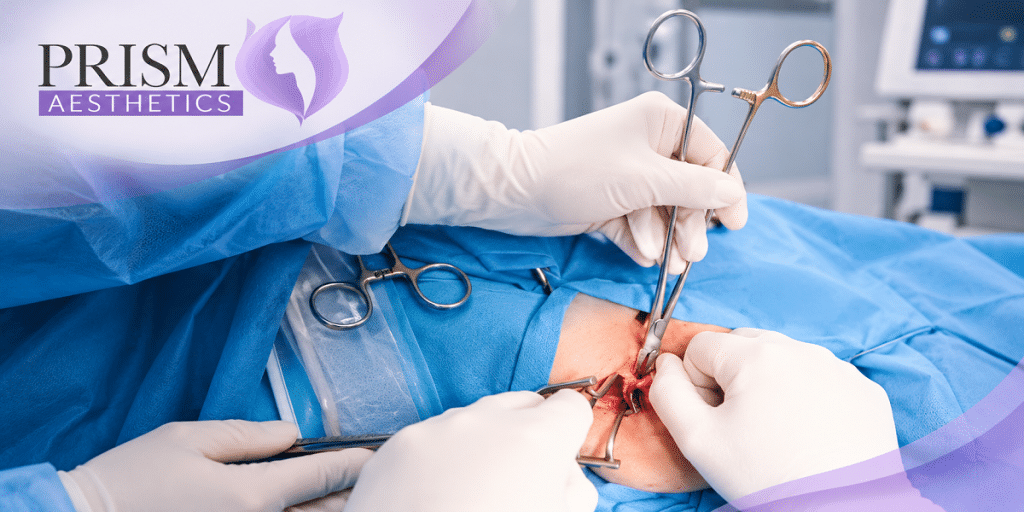
Discreet, expert care for a condition that is more common than you think.
An anal fistula can cause pain, swelling, discharge and repeated infections, and many people wait too long to get help because the condition feels embarrassing. It is a common medical problem, and it rarely heals on its own. At Prism Aesthetics Clinic, our board-certified surgeons offer Fistula Surgery in Dubai & Abu Dhabi in a private, comfortable setting. We explain every option honestly, including how each one protects your control (continence) and the chance of the fistula returning, so you can decide with confidence. Read on to see how treatment works, what recovery is like and what it costs.
If you have severe pain, fever, a hot swollen lump near the anus or you feel unwell, you may have an abscess, which needs urgent medical attention. Please go to the nearest emergency department.
Quick Facts:
- Type of Procedure: Surgical treatment of an anal fistula
- Treatment Time: About 30 to 90 minutes, depending on the fistula
- Anesthesia: Spinal or general (your surgeon will advise)
- Pain: Mild to moderate, well controlled with medication
- Hospital Stay: Often same day
- Downtime: Around 1 to 3 weeks, depending on the technique
- Healing: Gradual, over several weeks
- Best For: Persistent anal fistulas with discharge, pain or repeated abscesses
- Initial Consultation: Free
What Is a Fistula?
An anal fistula is a small abnormal tunnel that forms between the inside of the anal canal and the skin around the anus. It usually starts when a gland near the anus becomes infected and forms an abscess. After the abscess drains, a tunnel can remain. Common signs include ongoing discharge, pain or pressure, swelling, skin irritation and repeated abscesses. Less often, it is linked to conditions such as Crohn’s disease. A fistula rarely closes completely without treatment, and untreated fistulas can keep getting infected.
Aim of Fistula Surgery:
- Remove the infection and close or drain the tunnel
- Stop the discharge and repeated abscesses
- Relieve pain and discomfort
- Protect the muscles that control your bowels (continence)
- Reduce the chance of the fistula coming back
Who Should Consider Fistula Surgery?
You may need treatment if you:
- Have ongoing discharge, pain or swelling near the anus
- Have had repeated abscesses
- Have been told you have an anal fistula
- Have a drainage opening on the skin near the anus
- Notice that symptoms improve and then return
A doctor needs to examine you to confirm the diagnosis. Your surgeon may arrange an MRI or an ultrasound to map the tunnel, because the best operation depends on how the fistula runs in relation to your bowel muscles. Your surgeon will tell you honestly which option fits you.
Types Of Fistula Surgery at Prism Aesthetics Clinic:
| Type | Features | Best For |
|---|---|---|
| Fistulotomy | The tunnel is opened and left to heal from the inside out | Simple, low fistulas that do not involve much muscle |
| Seton Placement | A soft thread is placed in the tunnel to drain it and guide healing | Complex or high fistulas, or a first stage before another operation |
| LIFT Procedure | The tunnel is tied off and divided between the muscles, protecting them | Fistulas that pass through the muscle, to protect continence |
| Advancement Flap | The inner opening is closed with a flap of healthy tissue | Complex fistulas, to protect continence |
| Laser Fistula Treatment (FiLaC) | A laser fibre closes the tunnel from inside | Selected fistulas where preserving muscle is a priority |
| Fibrin Glue / Plug | The tunnel is filled and sealed | Selected fistulas, with a lower success rate in some cases |
The right technique depends on the position and complexity of your fistula, and many people need more than one stage. Some options protect continence better but have a higher chance of recurrence, and others are the opposite. Your surgeon will explain this clearly at your consultation.
How to Prepare for Fistula Surgery?
- Bring all earlier records, scans and reports
- Tell your doctor about all medicines, allergies and health conditions, including Crohn’s disease or diabetes
- Avoid blood thinners such as aspirin and ibuprofen unless your doctor says otherwise
- Stop smoking well before surgery, as it slows healing
- Follow your surgeon’s instructions on bowel preparation and fasting
- Arrange a lift home and some help for the first days
- Plan time off work for recovery
Procedure of Fistula Surgery:
- Initial Consultation: Your surgeon listens to your symptoms, examines you privately, may arrange an MRI or ultrasound, and explains the best option, the risks and the cost clearly.
- Preparation: We explain fasting, bowel preparation and what to bring.
- Anesthesia: You receive spinal or general anesthesia, so you feel no pain during the operation.
- Treatment: Your surgeon finds the full tunnel and treats it with the chosen technique, taking care to protect the muscles that control your bowels.
- Dressing: A dressing is placed, and you rest before going home.
- Aftercare Plan: We explain wound care, pain relief, bowel habits and when to return for review.
What To Expect After the Surgery?
- Soreness around the wound, controlled with medication
- Some bleeding or discharge on the dressing for a few days to weeks
- A wound that heals gradually from the inside out
- A need for regular cleaning, such as warm baths, as advised
- Follow-up visits to check healing, and sometimes a second stage
Recovery Timeline:
| Timeframe | What To Expect |
|---|---|
| Day 1-3 | Soreness and some discharge; rest and take medication as advised |
| Week 1-2 | Wound care and warm baths; many return to light work |
| Week 3-6 | Wound closes gradually; discharge reduces |
| Week 6-12 | Full healing for most; final review |
Recovery varies with the type of fistula and the technique. Complex fistulas can take longer, and some need staged treatment.
How To Care For The Area After Surgery?
- Keep the area clean and follow your surgeon’s dressing instructions
- Take warm sitz baths as advised
- Eat plenty of fiber and drink enough water to keep stools soft
- Avoid straining and constipation, and take stool softeners as prescribed
- Avoid heavy lifting and strenuous exercise until your surgeon clears it
- Avoid smoking, which slows healing
- Attend all follow-up visits
- Call us if you notice increasing pain, fever, spreading redness, heavy bleeding or new swelling
Benefits of our Fistula Treatment:
- Private, discreet and respectful care
- Treatment options chosen to protect your bowel control
- Clear explanations of risks, recovery and the chance of recurrence
- Imaging and careful planning before surgery
- Board-certified surgeons, clear costs and honest advice
- Follow-up care until you have healed
Cost of Fistula Surgery in Dubai:
The cost depends on the type and complexity of the fistula, the technique, the anesthesia, imaging, the hospital or facility and the surgeon’s experience. Complex fistulas may need more than one stage. Your exact price is confirmed after your free consultation, before you agree to anything. Insurance coverage varies, so check with your provider.
| Type of Procedure | Cost (AED) |
|---|---|
| Fistulotomy | [Add price] |
| Seton Placement | [Add price] |
| LIFT / Advancement Flap | [Add price] |
| Laser Fistula Treatment (FiLaC) | [Add price] |
What Affects the Cost?
- Type and complexity of the fistula
- Technique used and number of stages
- Imaging such as MRI
- Type of anesthesia and facility fees
- Surgeon’s qualifications and experience
- Follow-up visits and aftercare
Book Us Now!
Looking for discreet, expert care for Fistula Surgery in Dubai & Abu Dhabi? Book your free consultation at Prism Aesthetics Clinic. Our board-certified surgeons will examine you privately, explain your options, the risks and the cost, and tell you honestly what to expect, with no pressure to decide on the day.