Introduction: Your Child’s Smile, Our Commitment
Welcome to Prism Aesthetics Clinic, where pediatric dentistry transcends clinical excellence to become an art form of compassion and precision. We understand that your child’s dental health is foundational to their overall wellbeing, confidence, and quality of life. Located in the heart of Sharjah, our clinic specialises exclusively in paediatric dentistry—providing gentle, evidence-based dental care for infants, children, and adolescents from their first tooth through their teenage years.
At Prism Aesthetics Clinic, we recognise that children are not miniature adults. Their dental anatomy, psychology, and developmental needs require specialised knowledge, tailored techniques, and an environment specifically designed to transform dental visits from sources of anxiety into positive, empowering experiences. Our approach combines advanced paediatric dental science with genuine warmth and patience, ensuring that every young patient leaves our clinic not just with healthier teeth, but with a lifelong, positive relationship with oral healthcare.
Why families across the UAE trust us:
- Specialised paediatric dentistry expertise (not general dentistry for children)
- Child-centric treatment philosophy backed by international best practices
- State-of-the-art facility designed specifically for young patients
- Commitment to preventive care that lasts a lifetime
- Emergency care available when your child needs us most
Whether your child requires preventive care, restorative treatment, or specialised interventions, Prism Aesthetics Clinic stands as Sharjah’s premier destination for paediatric dentistry. We serve families across the UAE—from Dubai to Ajman—because parents recognise that exceptional paediatric dental care is worth the journey. Your child deserves nothing less than world-class expertise, delivered with the gentleness and understanding that makes a profound difference.
Our commitment extends beyond the clinical chair. We empower parents with education, guidance, and realistic expectations, ensuring that dental health becomes a family priority and a lifelong foundation for your child’s confidence and wellbeing.
Why Choose Prism Aesthetics Clinic in Sharjah for Your Child’s Dental Care?
Expertise You Can Trust: Specialist-Led Paediatric Dentistry
At Prism Aesthetics Clinic, your child’s dental care is guided by clinicians with specialised training and profound expertise in paediatric dentistry. Our team brings years of dedicated experience in managing children’s unique dental needs, behavioural considerations, and developmental stages.
What Sets Our Team Apart:
| Qualification | Details |
|---|---|
| Specialisation | Postgraduate training in paediatric dentistry (not general practice) |
| Child Psychology | Advanced training in developmental psychology and behavioural guidance |
| Safety Protocols | International standards in infection control and radiation safety |
| Sedation Expertise | Certified in paediatric sedation management with continuous monitoring |
| Continuous Learning | Active membership in recognised paediatric dental associations |
| Experience | Years of dedicated paediatric case management across diverse age groups |
Paediatric dentistry is not a general practice—it is a distinct specialty requiring postgraduate training in child psychology, developmental growth patterns, restorative techniques for primary and permanent teeth, and behavioural guidance strategies. Our clinicians maintain current certifications and regularly participate in continuing education through recognised paediatric dental associations, ensuring we remain at the forefront of evidence-based practices and technological advancements.
Our Safety Commitment:
- ✓ Highest international standards of infection control
- ✓ Low-dose digital radiography with radiation safety protocols
- ✓ Gentle sedation options (nitrous oxide & conscious sedation)
- ✓ Continuous vital sign monitoring during all procedures
- ✓ Comprehensive medical history screening
- ✓ Emergency protocols for every scenario
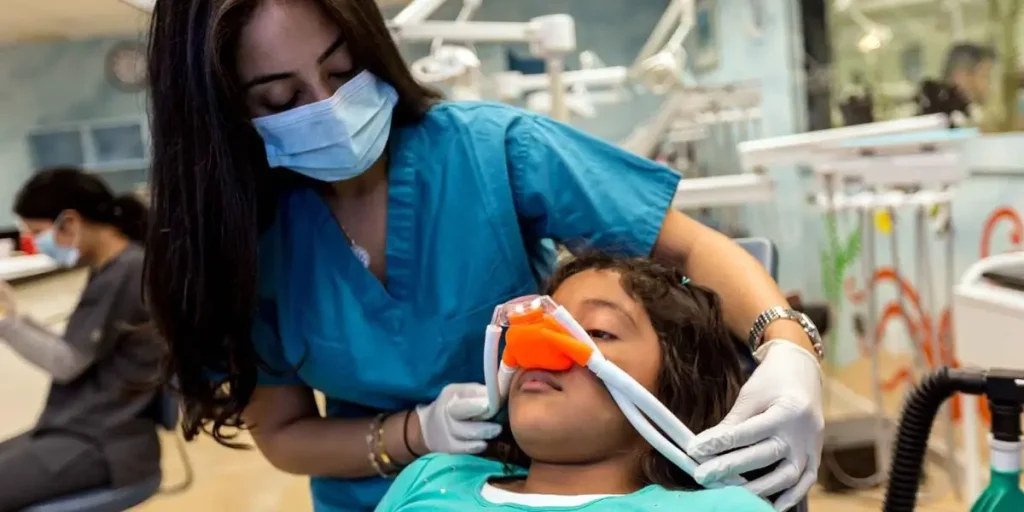
We prioritise patient safety above all else. Our clinic adheres to the highest international standards of infection control, radiation safety protocols, and sedation management. For children requiring additional support during treatment, we employ gentle sedation options—including nitrous oxide (laughing gas) and, when appropriate, conscious sedation—administered by trained professionals with continuous monitoring. Every protocol is tailored to your child’s age, medical history, and comfort level.
Our World-Class Protocol: Child-Centered, Evidence-Based Care
Prism Aesthetics Clinic operates according to a comprehensive paediatric dental philosophy that places your child’s emotional and physical comfort at the centre of every interaction. Our treatment protocols are built on three foundational pillars:
Our Three-Pillar Approach:
| Pillar | What We Do | Your Child Benefits |
|---|---|---|
| Prevention First | Routine cleanings, fluoride applications, dental sealants, oral hygiene education | Minimises need for invasive procedures; establishes lifelong healthy habits |
| Advanced Restorative | Modern, minimally invasive techniques; tooth-coloured materials; conservative approach | Preserves healthy tooth structure; reduces anxiety about treatment |
| Behavioural Guidance | Tell-show-do methodology; positive reinforcement; desensitisation; distraction strategies | Feels secure and empowered; develops positive attitudes toward dental care |
Prevention First—Your Foundation
- Routine professional cleanings tailored to your child’s age
- Fluoride applications strengthening tooth enamel
- Dental sealants protecting vulnerable back teeth (up to 80% cavity prevention)
- Oral hygiene education for child and parent
- Dietary counselling addressing cavity-causing habits
Advanced Restorative Techniques—When Treatment Is Needed
- Minimally invasive cavity management
- Tooth-coloured composite materials (not dark amalgam)
- Biocompatible restorations designed for growing teeth
- Trauma management for knocked-out or fractured teeth
- Conservative approach preserving maximum tooth structure
Behavioural Guidance & Anxiety Management—The Psychological Component We recognise that dental anxiety is common in children and can have lasting psychological effects. Our team employs evidence-based behavioural techniques:
- Tell-show-do methodology (explain, demonstrate, then perform)
- Positive reinforcement and reward systems
- Gradual desensitisation for anxious children
- Distraction strategies (music, ceiling screens, guided imagery)
- Voice control and confidence-building language
Digital Documentation & Parent Communication
- Advanced digital imaging (low-dose X-rays, intraoral photography)
- Secure, easily accessible electronic records
- Detailed explanations with visual documentation
- Clear guidance on home care protocols
- Collaborative partnership between clinic and family
Patient-Centric Promise: Lifetime Preventive Partnership
Our defining commitment at Prism Aesthetics Clinic is creating a Lifetime Preventive Partnership with every family we serve. This means we don’t simply treat dental problems—we prevent them through ongoing education, proactive monitoring, and individualised guidance tailored to your child’s unique risk factors and developmental stage.
What Your Lifetime Partnership Includes:
- Continuous developmental monitoring from first tooth through adolescence
- Early identification of emerging concerns (cavities, bite issues, growth problems)
- Proactive guidance adjusted as your child grows and changes
- Long-term tracking of treatment success and outcomes
- Emergency access when urgent care is needed
- Parent education and support at every stage
From your child’s first dental visit through their teenage years, we remain invested in their oral health trajectory. We track developmental milestones, identify emerging concerns early, and adjust our approach as your child grows. This continuity of care ensures that every family benefits from personalised, long-term expertise rather than fragmented, episodic treatment.
The Paediatric Dental Journey: From First Visit to Confident Smile
Step 1: Personalised Consultation & Comprehensive Assessment
Your child’s journey at Prism Aesthetics Clinic begins with a comprehensive, unhurried consultation designed to understand their unique needs, concerns, and medical history. During this initial appointment, we take time to:
What Happens at Your Child’s First Visit:
| Component | What We Do | Why It Matters |
|---|---|---|
| Meet in Comfort Zone | Calm environment; no pressure for immediate treatment; child-led pace | Builds trust and reduces anxiety about future visits |
| Health History | Detailed medical background, previous dental experiences, family dental history | Identifies risk factors and tailors our approach |
| Behaviour Assessment | Screen for anxiety, special needs, habits (thumb sucking, tongue thrusting) | Allows us to modify treatment techniques appropriately |
| Gentle Examination | Child-appropriate instruments; thorough assessment of teeth, gums, bite | Establishes baseline and identifies current concerns |
| Digital Documentation | Low-dose X-rays (when age-appropriate); intraoral photographs | Creates visual record and enables detailed parent education |
| Findings Discussion | Clear, jargon-free explanation with visual evidence | Parents make informed decisions about treatment options |
| Customised Plan | Prioritised treatment options with realistic timeline | Clear roadmap for your child’s dental journey |
Meet Your Child in Their Comfort Zone
- Calm, child-friendly environment
- No pressure for immediate treatment
- Time to explore the clinic at your child’s pace
- Opportunity to meet our team and build trust
- Anxiety-free introduction to dental care
Gather Detailed Health & Dental History We ask thorough questions about:
- Medical background and current medications
- Previous dental experiences (positive or negative)
- Current oral habits (thumb sucking, tongue thrusting, mouth breathing)
- Dietary patterns (sugary drinks, snacking habits)
- Family dental history and cavity risk
- Any anxiety or behavioural concerns
Perform Gentle Clinical Examination
- Child-appropriate instruments designed for small mouths
- Thorough assessment of teeth, gums, and oral structures
- Screening for cavities, developmental concerns, and bite alignment
- Assessment of orthodontic risk factors
- Evaluation of overall oral health status
Capture Digital Documentation
- Low-dose digital radiographs (when age-appropriate for your child)
- Intraoral photographs for baseline comparison
- Visual record for tracking development over time
- Images shared with parents for education and discussion
Discuss Findings & Create a Customised Plan
- Explain findings in clear, non-technical language
- Show visual evidence of any concerns identified
- Discuss realistic treatment recommendations
- Prioritise concerns based on urgency and your child’s needs
- Establish achievable goals and treatment timeline
Step 2: The Procedure (What to Expect) – Gentle, Comfortable Treatment
When your child requires dental treatment, we employ a carefully structured approach designed to maximise comfort, minimise anxiety, and achieve excellent clinical outcomes.
Our Treatment Process—Simplified:
PREPARATION → COMFORT MANAGEMENT → TREATMENT → POST-CAREPre-Treatment Preparation Before any procedure, we thoroughly explain what will happen using child-friendly language and visual aids:
- Demonstrate instruments in a non-threatening way
- Allow your child to touch tools and hear sounds
- Explain sensations they might experience
- Answer all questions before beginning
- Use the “tell-show-do” method proven to reduce anxiety
Comfort Management Options
| Comfort Level | What We Use | When It’s Right For Your Child |
|---|---|---|
| Minimal Anxiety | Topical anesthesia only | Simple cleanings, fluoride applications |
| Moderate Anxiety | Local anesthesia (numbing) | Fillings, minor restorative work |
| High Anxiety | Nitrous oxide (laughing gas) + local anesthesia | More complex procedures or anxious children |
| Severe Anxiety | Conscious sedation (when medically appropriate) | Extensive work or children with special needs |
Comfort Techniques We Employ:
- ✓ Topical anesthesia before injections (eliminates needle sensation)
- ✓ Nitrous oxide (laughing gas) for deeply relaxed, anxiety-free experience
- ✓ Conscious sedation options for appropriate cases
- ✓ Protective eyewear and noise-reducing headphones
- ✓ Distraction techniques (ceiling screens, music, guided imagery)
- ✓ Breaks whenever your child needs them
Minimally Invasive Techniques We prioritise conservative approaches that preserve healthy tooth structure:
- Tooth-coloured composite materials bonded to remaining structure
- Chemomechanical caries removal (gentler than traditional drilling)
- Minimal, precise instrumentation
- Modern restorative materials designed for growing teeth
- Preservation of maximum natural tooth structure
Continuous Communication Throughout treatment, we maintain ongoing dialogue with your child:
- Check-in regularly about comfort
- Explain each step as we go
- Pause if your child needs a break
- Celebrate cooperation and bravery
- Provide reassurance and encouragement
Post-Treatment Comfort After treatment, we provide:
- Clear instructions about eating, drinking, and activity
- Information about what sensations are normal
- Guidance on managing mild sensitivity or discomfort
- Emergency contact information for concerns
- Follow-up contact within 24-48 hours
Step 3: Post-Procedure Care & Recovery in Sharjah
Recovery after paediatric dental treatment is typically swift and uncomplicated. At Prism Aesthetics Clinic, we ensure that post-treatment success is supported by clear guidance, accessible follow-up care, and genuine partnership with parents.
Your Recovery Timeline
| Timeline | What to Expect | What to Do |
|---|---|---|
| First 24 Hours | Slight tenderness; numbness may still be present | Avoid extremely hard, hot, or sticky foods; monitor for swelling |
| Days 2-3 | Sensitivity to temperature (normal); return to normal activities | Continue soft foods; resume normal brushing and flossing gently |
| Days 4-7 | Sensitivity typically resolves; restorations fully set | Return to normal diet and activities; maintain excellent home care |
| Week 2+ | Complete healing; normal function restored | Maintain preventive routine; schedule follow-up appointment |
Immediate Post-Treatment (First 24 Hours) After treatment, your child’s mouth may feel slightly tender or sensitive. We provide:
- Detailed written instructions for home care
- Direct verbal guidance from our clinical team
- Clear information about what sensations are normal
- Reassurance about timeline for complete healing
- Emergency contact information for concerns
Most children resume normal activities—playing, eating soft foods, attending school—within hours of treatment.
First Week Recovery If your child received a filling, crown, or other restoration, we advise:
- Avoid extremely hard, sticky, or hot foods until restoration fully sets
- Sensitivity to temperature is common and temporary (24-48 hours)
- Gentle brushing and flossing (maintaining excellent home care)
- Monitoring for any unusual swelling or discomfort
- Contact us immediately if concerns arise
Our Aftercare Support Structure
| What We Provide | How It Helps Your Family |
|---|---|
| 24-48 Hour Follow-Up Contact | Our team proactively checks on your child’s comfort and healing |
| Accessible Clinical Support | Direct access to guidance about home care and emerging concerns |
| Scheduled Recall Appointments | Regular monitoring (typically every 6 months) of your child’s development |
| Digital Records & Parent Portal | Easy access to treatment documentation, X-rays, and progress photos |
| Emergency Access | Swift response if concerns arise between scheduled appointments |
Ongoing Aftercare & Support Our commitment to your child’s dental health doesn’t end when they leave the clinic. We provide:
- Follow-up Contact: Our team proactively contacts families 24-48 hours after treatment to ensure your child is comfortable and healing well
- Accessible Support: Parents have direct access to clinical guidance and support—answering questions about home care, addressing emerging concerns, and providing reassurance
- Scheduled Recall Appointments: We establish a preventive recall schedule (typically every 6 months) to monitor your child’s ongoing development, catch emerging issues early, and reinforce oral hygiene practices
- Digital Records & Parent Portal: Parents receive copies of treatment documentation, X-rays, and progress photos—maintaining transparency and enabling informed decision-making
Long-Term Monitoring As your child grows, their dental needs evolve. We continuously assess:
- Bite development and alignment patterns
- Transition from primary to permanent teeth
- Early orthodontic concerns requiring intervention
- Emerging cavities or structural issues
- Impact of growth on previous restorations
This longitudinal perspective ensures that emerging issues are addressed proactively, often preventing more complex (and costly) problems later.
Essential Questions About Paediatric Dentistry in Sharjah
Am I a Candidate? Is My Child Ready for Paediatric Dental Care?
Every child benefits from paediatric dental care, beginning as early as their first tooth erupts or by age one—whichever comes first. Prism Aesthetics Clinic welcomes children of all ages:
Ideal Ages for Paediatric Dental Care
| Age Group | Key Focus | Why This Matters |
|---|---|---|
| Infants & Toddlers (Birth–3 years) | First tooth monitoring; oral hygiene guidance; safe teething practices | Early habits establish foundation for lifelong dental health |
| Preschoolers (3–6 years) | Positive dental attitudes; cavity prevention; behaviour establishment | Critical window for developing comfort with dental environments |
| School-Age (7–12 years) | Monitoring permanent tooth eruption; bite development; cavity prevention | Permanent teeth are beginning to come through; early intervention prevents problems |
| Adolescents (13–18 years) | Bite assessment; orthodontic screening; independence in home care | Teenage habits impact lifelong dental health; early intervention crucial |
Infants & Toddlers (Birth to 3 years)
- Early visits establish comfort with dental environments
- Allow us to monitor early tooth development
- Guide parents on oral hygiene for young children
- Advise on safe teething practices
- Monitor for early childhood caries (preventable with proper guidance)
Preschoolers & Young School-Age Children (3 to 7 years)
- These years are critical for establishing positive dental attitudes
- Focus on prevention and early cavity detection
- Monitor bite development and tooth eruption
- Address behavioural habits (thumb sucking, tongue thrusting)
- Build confidence and comfort with dental care
School-Age Children & Adolescents (8 to 18 years)
- Monitor eruption of permanent teeth
- Assess bite development and identify alignment concerns
- Screen for orthodontic intervention needs
- Address cavity risk and guide hygiene habits
- Support independence during critical teenage years
Children with Special Needs We welcome children with:
- Developmental disabilities or autism spectrum disorder
- Severe anxiety or phobia disorders
- Medical complexities requiring specialised management
- Sensory sensitivities requiring modified approaches
- Behavioural challenges requiring patience and expertise
Our team has experience and patience with diverse needs, modifying our approach to ensure every child receives compassionate, appropriate care.
Ideal Candidate Profile
Your child is an ideal candidate for paediatric dental care if they have:
- ✓ Emerging teeth requiring monitoring
- ✓ Risk for cavities (based on diet, hygiene, or family history)
- ✓ History of dental trauma
- ✓ Signs of bite concerns or misalignment
- ✓ Previous dental anxiety or negative experiences
- ✓ Special healthcare needs requiring specialised management
In reality—every child is a candidate because every child deserves specialised paediatric expertise and compassionate care.
What is the Expected Recovery Time & Downtime?
One of the most reassuring aspects of paediatric dentistry is that recovery is typically minimal and non-disruptive to your child’s normal routine.
Recovery Timeline by Procedure Type
| Procedure Type | Recovery Time | Activity Restrictions | Return to Normal |
|---|---|---|---|
| Preventive Visit | No recovery | None | Immediate |
| (Cleaning, Fluoride, Sealants) | — | Immediate return to all activities | Full normal routine |
| Restorative Treatment | 24–48 hours | Avoid hard/sticky foods while restoration hardens | 2–3 days |
| (Fillings, Crowns) | — | Watch for sensitivity (typically resolves in 48 hours) | Normal eating by day 3 |
| Extractions | 24–72 hours | Soft foods; gentle rinsing; avoid vigorous activity | 3–5 days for full healing |
| (When Necessary) | — | Normal function typically returns within 24 hours | Resume all activities |
| Procedures with Sedation | 30–60 minutes | Post-sedation observation period | 2–4 hours post-appointment |
| (Nitrous or Conscious) | — | Rest day recommended (no strenuous activity) | Resume normal routine next day |
For Preventive Visits (Cleanings, Fluoride, Sealants)
- No recovery is needed
- Your child can resume all normal activities—eating, playing, school, sports—immediately after the appointment
- Fluoride applications can make teeth slightly sensitive for a few hours (normal and temporary)
For Restorative Treatment (Fillings, Crowns)
- Most children experience no significant downtime
- Advise avoiding extremely hard or sticky foods for 24 hours while composite restorations fully harden
- Watch for sensitivity to temperature (typically resolves within 48 hours)
- Normal school attendance, play, and activities continue as usual
- Resume normal diet gradually as numbness wears off
For Extractions (When Necessary)
- Mild soreness is normal for 24–48 hours
- We provide detailed guidance on post-extraction care:
- Soft foods for first 3–5 days
- Gentle rinsing (avoid vigorous swishing)
- Monitor for unusual bleeding or swelling
- Activity restrictions for 24–48 hours
- Most children feel completely normal within 3–5 days
- Normal diet and activities resume within a week
For Procedures Requiring Sedation
- Nitrous oxide (laughing gas) sedation wears off within minutes of stopping administration
- Most children are alert and ready to leave within 15–30 minutes
- Conscious sedation, if used, may require 30–60 minutes of observation
- We provide detailed post-sedation instructions and guidance
- Rest recommended for remainder of day; resume normal activities next day
Bottom Line Paediatric dental treatment rarely interferes with school, sports, or normal childhood activities. We design our procedures and timing to minimise disruption to your child’s life. Most children resume full normal activities within 24–48 hours of treatment.
How Much Does Paediatric Dentistry Cost in Sharjah?
Paediatric dental treatment costs vary based on several factors—and we’re committed to transparent, honest pricing that reflects genuine expertise and quality.
What Determines Your Treatment Cost
| Cost Factor | Details | Impact |
|---|---|---|
| Clinical Complexity | Routine cleaning vs. multi-surface filling vs. extraction | Simple procedures cost less; complex cases require more time and expertise |
| Clinician Expertise | Specialised paediatric training and credentials | Specialists command professional fees reflecting their advanced knowledge |
| Facility Standards | World-class infrastructure, technology, and equipment | Premium facilities justify premium pricing; reflects your child’s safety |
| Behavioural Management | Tell-show-do, positive reinforcement, possibly sedation | Anxious children require additional clinician time and specialised techniques |
| Sedation Requirements | Nitrous oxide or conscious sedation with monitoring | Sedation requires additional training, monitoring, and professional time |
| Individual Treatment Plan | Customised approach to your child’s unique needs | Every child’s plan is different; costs reflect their specific requirements |
Pricing Philosophy
| Aspect | Our Approach |
|---|---|
| Transparency | Detailed cost estimates provided during consultation—no surprises |
| Quality Over Price | We prioritise exceptional outcomes, not lowest cost |
| Payment Options | Flexible arrangements available; cost never a barrier to essential care |
| Insurance Coordination | We work with your insurance provider to maximise coverage |
| Investment Perspective | Preventive care now prevents costly problems later |
Typical Cost Ranges (Illustrative)
- Preventive visit (cleaning, fluoride): AED 250–400
- Simple filling (1 surface): AED 600–900
- Complex filling (multiple surfaces): AED 1,200–1,800
- Extraction (simple): AED 800–1,200
- Paediatric crown: AED 1,500–2,500
Note: Actual costs depend on individual case complexity and are provided during your consultation.
Cost Factors That Influence Your Investment
Complexity of Clinical Need A routine cleaning and fluoride application costs less than a multi-surface filling or crown. Extractions, trauma management, or complex restorative cases require more time, expertise, and materials, thus higher cost.
Clinician Expertise & Experience Our team’s specialised paediatric training, credentials, and experience command professional fees that reflect their expertise. This is similar to how a paediatric orthopaedic surgeon commands different fees than a generalist—specialisation carries value.
Facility Standards & Technology Prism Aesthetics Clinic maintains world-class infection control, digital imaging, modern restorative materials, and child-specific equipment. These investments in quality infrastructure are reflected in our treatment fees.
Behavioural & Sedation Requirements Children requiring behavioural guidance, nitrous oxide, or conscious sedation need additional clinician time, monitoring, and expertise. These services carry additional professional fees.
Individual Treatment Plan During your consultation, we provide a detailed cost estimate specific to your child’s needs. We discuss payment options, insurance coordination, and available financial arrangements to ensure cost never becomes a barrier to essential paediatric dental care.
Our Philosophy We believe paediatric dental care is an investment in your child’s lifelong health, confidence, and quality of life. Premium expertise, compassionate care, and exceptional outcomes justify thoughtful investment—far less than the cost of managing untreated dental disease or correcting neglected problems later.
How Long Do the Results Last? Permanence & Longevity
The longevity of paediatric dental treatment depends on the type of treatment and your child’s adherence to ongoing preventive care.
Longevity by Treatment Type
| Treatment Type | Expected Longevity | What Affects Duration | Your Role in Success |
|---|---|---|---|
| Preventive Care | Ongoing (as long as visits continue) | Regular 6-month visits; home care quality | Maintain schedule; support home hygiene |
| (Cleanings, Fluoride, Sealants) | Sealants: 5–10 years | Trauma; decay around restoration margins | Encourage protective habits |
| Restorative Treatment | 5–10 years (fillings) | Home care; diet; oral habits; trauma | Excellent brushing/flossing; limit sugary foods |
| (Fillings & Crowns) | 2–5+ years (crowns) | Structural integrity; eruption of permanent tooth | Regular check-ups; protect from trauma |
| Extractions | Permanent (temporary effect) | Natural eruption of permanent replacement tooth | Monitor eruption; orthodontic screening |
| Orthodontic Intervention | Long-term (if followed up properly) | Compliance with appliances; post-treatment retention | Follow treatment plan; use retainers |
Preventive Care Results (Cleanings, Fluoride, Sealants)
- These preventive measures are ongoing protective strategies, not “treatments” with defined endpoints
- Benefits last as long as your child receives regular preventive visits (typically every 6 months) and maintains excellent home oral hygiene
- Dental sealants typically last 5–10 years but may need reapplication as your child grows
- Regular professional cleaning removes tartar that home care cannot address
Restorative Treatment (Fillings & Crowns)
- High-quality composite fillings typically last 5–10 years with proper care
- Longevity depends on filling size, tooth location, and your child’s habits
- Paediatric crowns (often stainless steel or tooth-coloured materials) protect damaged teeth and typically remain functional until the underlying permanent tooth erupts and replaces the baby tooth
- Some restorations may need replacement or repair if your child experiences trauma or decay around the restoration
- Excellent home care and regular preventive visits significantly extend longevity
Extractions & Orthodontic Considerations
- When primary teeth are extracted, the permanent tooth below eventually erupts in its place—a natural developmental process
- We monitor this process closely and assess whether orthodontic intervention will be needed
- Timeline extends over years, reflecting your child’s natural development
- Early intervention often prevents the need for more extensive orthodontic treatment later
Long-Term Success Factors
Your child’s treatment success depends critically on these factors:
| Factor | What It Means | Your Responsibility |
|---|---|---|
| Home Oral Hygiene | Regular, thorough brushing and flossing | Establish and support consistent habits |
| Dietary Habits | Limiting sugary foods and beverages | Model healthy choices; limit cavity-causing snacks/drinks |
| Regular Preventive Visits | Consistent 6-month check-ups | Maintain appointment schedule without delays |
| Avoiding Oral Trauma | Protective mouthguards during sports; careful habits | Encourage safety; provide mouthguards for sports |
| Parent-Child Partnership | Shared responsibility for dental health | Support your child’s developing independence |
Our Lifetime Partnership Approach We don’t simply place a filling and hope for the best. We establish ongoing, proactive monitoring, education, and support—ensuring that treatment results are maximised and your child’s dental trajectory remains positive throughout their growth and development.
Exploring Your Child’s Dental Options: Comprehensive Paediatric Care
At Prism Aesthetics Clinic, paediatric dentistry encompasses far more than treating cavities. We offer a comprehensive range of services addressing your child’s unique developmental needs:
Our Complete Service Menu
| Service Category | Specific Services | Benefits |
|---|---|---|
| Preventive Services | Routine cleanings, fluoride applications, dental sealants, oral health education | Minimises invasive procedures; establishes lifelong healthy habits |
| Restorative Care | Simple & complex fillings, crowns, pulp therapy, extractions | Preserves tooth structure; restores function and appearance |
| Orthodontic Monitoring | Early bite assessment, growth monitoring, early intervention | Identifies concerns early; prevents more complex problems later |
| Behavioural Guidance | Habit management (thumb sucking, tongue thrusting, mouth breathing, bruxism) | Supports healthy development; prevents alignment issues |
| Trauma Management | Emergency care for knocked-out teeth, fractures, oral injuries | Swift intervention maximises success; long-term management prevents complications |
| Special Needs Dentistry | Tailored approaches for autism, developmental disabilities, medical complexities, anxiety | Ensures every child receives compassionate, appropriate care |
Preventive Services Routine cleanings, fluoride applications, dental sealants, and oral health education form the foundation of our preventive approach, minimising the need for invasive treatment.
Restorative Care From simple fillings to complex crown therapy, we employ minimally invasive techniques and modern materials to preserve tooth structure and restore function.
Orthodontic Monitoring & Early Intervention We assess bite development, identify potential alignment concerns early, and provide guidance on growth and eruption patterns. Early orthodontic intervention can often prevent or simplify later treatment.
Behavioural Guidance & Habit Management We address common paediatric concerns including thumb sucking, tongue thrusting, mouth breathing, and bruxism (teeth grinding)—providing strategies and guidance to support healthy oral development.
Trauma Management Dental injuries are common in active children. We provide emergency treatment for knocked-out teeth, fractures, and oral injuries, combined with long-term management strategies to ensure optimal healing and outcomes.
Special Needs Dentistry Children with autism, developmental disabilities, medical complexities, or severe anxiety receive tailored care approaches and modified techniques ensuring they receive compassionate, appropriate treatment.
Explore our comprehensive service pages to learn more about specific paediatric dental needs or related services. Our goal is comprehensive, proactive dental care that supports your child’s optimal oral health throughout their developmental years.
Begin Your Child’s Dental Journey at Prism Aesthetics Clinic
Your child’s smile reflects not just their dental health, but their confidence, comfort, and quality of life. At Prism Aesthetics Clinic in Sharjah, we believe that exceptional paediatric dentistry is both a science and an art—combining advanced clinical expertise with genuine compassion, behavioural understanding, and unwavering commitment to your child’s wellbeing.
Whether your child needs their first dental visit, ongoing preventive care, or treatment for existing concerns, Prism Aesthetics Clinic stands ready to provide world-class paediatric dentistry delivered with the gentleness, expertise, and long-term partnership your family deserves. We serve families throughout the UAE—from Sharjah to Dubai, Ajman, and beyond—because parents recognise that your child’s dental health is too important to compromise.
What families tell us:
- “Our child now looks forward to dental visits”
- “Finally, someone who truly understands children’s dental care”
- “Exceptional expertise combined with genuine care”
- “Worth the journey from Dubai”
Schedule Your Consultation Today
Your child’s smile is our priority. Book your child’s confidential consultation with Prism Aesthetics Clinic in Sharjah today.
Contact Prism Aesthetics Clinic:
- Call us now to schedule your appointment
- Visit our website to book online
- Email us with any questions before your visit
Let us partner with you in creating a lifetime of healthy, confident smiles.
FAQs About Paediatric Dentistry in Sharjah
Q: At what age should my child have their first dental visit?
A: The American Academy of Paediatric Dentistry recommends a first visit when the first tooth erupts or by age one—whichever comes first. Early visits establish comfort with dental care and allow us to monitor healthy development from the very beginning.
Q: Is nitrous oxide (laughing gas) safe for children?
A: Yes, absolutely. Nitrous oxide is one of the safest sedative agents used in paediatric dentistry. It has been used safely for decades, wears off immediately when discontinued, and is administered with continuous monitoring of your child’s vital signs and oxygen levels. Your child remains awake and responsive throughout the procedure—they simply feel deeply relaxed and calm.
Q: How can I help my child overcome dental anxiety?
A: Several strategies help tremendously:
| Strategy | How It Works |
|---|---|
| Use Positive Language | Avoid words like “pain,” “shot,” or “drill.” Use “cleaning,” “sleepy water,” “gentle cleaning” |
| Model Positive Behaviour | Share your own positive dental experiences; avoid expressing your own anxiety |
| Visit Together First | Bring your child to observe your appointment before their own |
| Read Children’s Books | Age-appropriate dental books normalise the experience |
| Practice at Home | Let them practice opening their mouth; familiarise them with toothbrush sensations |
| Communicate with Us | Tell us about anxiety concerns beforehand so we can tailor our approach |
| Celebrate Cooperation | Praise your child’s bravery after their appointment; reward positive behaviour |
Parental attitude is crucial. Children pick up on parent anxiety, so maintaining calm, positive expectations makes an enormous difference.
Q: Should my child use fluoride toothpaste?
A: Yes, age-appropriate fluoride toothpaste is highly recommended by dental professionals. Fluoride significantly reduces cavity risk when used appropriately:
| Child’s Age | Toothpaste Amount | Application | Notes |
|---|---|---|---|
| Under 3 years | Grain-sized amount | Apply on brush; supervise brushing | Minimal swallowing; minimal fluoride ingestion |
| 3–6 years | Pea-sized amount | Apply on brush; supervise brushing | Encourage spitting out after brushing |
| 6+ years | Pea-sized to regular amount | Apply independently with guidance | Teach proper brushing technique |
| Fluoride Varnish | Professional application | Applied by dentist 1–2 times yearly | Extra protection for high-risk children |
Fluoride is a naturally occurring mineral that hardens tooth enamel and prevents cavities. At the recommended doses, it is safe and effective for children when used as directed.
Q: What should I do if my child has a dental emergency (knocked-out tooth, fracture)?
A: Contact us immediately. Time is critical for certain injuries:
| Emergency Scenario | Immediate Action | Bring to Clinic |
|---|---|---|
| Knocked-Out Tooth | Keep tooth clean and moist (in milk or child’s saliva); don’t touch root | Tooth in container within 30 minutes if possible |
| Fractured Tooth | Rinse area gently; apply ice to face if swelling; avoid hard foods | Bring any tooth fragments; take note of when injury occurred |
| Severe Bleeding | Apply gentle pressure with clean gauze for 10–15 minutes | Gauze; description of injury mechanism |
| Knocked-Out Tooth Advice | Re-implantation most successful within 30 minutes of injury | Every minute counts—call us immediately |
| Lip/Tongue Laceration | Rinse gently; apply ice; assess severity | High-quality photography if available |
| Swelling or Severe Pain | Apply ice to exterior; avoid hot foods; use gentle pain relief | Detailed description of injury |
Important: If your child experiences trauma, contact us immediately. We provide emergency care and detailed guidance. For knocked-out teeth, re-implantation success decreases significantly after 30 minutes, so rapid intervention is essential.
Q: How often should my child visit the dentist?
A: Most children benefit from preventive visits every 6 months. However, frequency depends on individual risk factors:
| Risk Level | Visit Frequency | Reason |
|---|---|---|
| Low Risk | Every 6 months | Good home care; low cavity history; low-sugar diet |
| Moderate Risk | Every 4–6 months | Some cavity history; dietary habits need monitoring; behavioural factors |
| High Risk | Every 3–4 months | Multiple cavities; high-sugar diet; poor home care; special needs |
| Very High Risk | Every 2–3 months | Active cavity disease; severe neglect; medical complexities |
We assess your child’s individual risk during the consultation and recommend an appropriate schedule. Children at higher risk for cavities (based on diet, hygiene, or family history) benefit from more frequent monitoring. This proactive approach catches problems early when they’re easiest to treat.
Q: My child has never been to the dentist. Will they be scared?
A: First visits are often the easiest! Here’s why:
- No treatment pressure: First visits focus entirely on comfort and familiarity
- Positive associations: We create pleasant, welcoming experiences
- Child-focused environment: Everything from instruments to staff interactions is designed for children
- Gradual approach: We never rush or force children into uncomfortable situations
- Your presence: Parents can remain in the room for moral support
- Celebration focus: We celebrate their bravery and cooperation
Many children who were initially anxious become enthusiastic dental patients. Creating positive early experiences establishes lifelong comfort with dental care.
Q: Can I stay in the room during my child’s treatment?
A: Absolutely. We encourage parental presence during treatment. Your child feels more secure with you nearby, and you can:
- Observe our techniques and approach
- Provide reassurance and support
- Understand treatment recommendations
- Learn home care strategies
- Ask questions in real time
Your presence is generally beneficial, though sometimes children perform best with gentle parental encouragement to manage feelings independently—we’ll guide you on what works best for your child.
Q: What if my child has a medical condition? Can you still treat them?
A: Yes. We have extensive experience managing children with various medical conditions and special needs:
Conditions We Regularly Manage:
- ✓ Asthma
- ✓ Diabetes
- ✓ Heart conditions (requiring antibiotic prophylaxis)
- ✓ Bleeding disorders or anticoagulant therapy
- ✓ Autism spectrum disorder
- ✓ ADHD
- ✓ Anxiety disorders
- ✓ Developmental disabilities
- ✓ Seizure disorders
- ✓ Immunocompromised states
During your consultation, we gather detailed medical history and tailor our approach accordingly. We may coordinate with your child’s medical team, adjust techniques, use modified sedation protocols, or schedule appointments strategically. No child is turned away due to medical complexity—we adapt our care to meet their unique needs safely.
Q: How do I encourage good oral hygiene habits at home?
A: Establishing positive habits early sets your child up for lifelong dental health:
| Age Group | Approach | Specific Strategies |
|---|---|---|
| Infants (0–2 years) | Parent-led | Wipe gums with clean cloth; start brushing when teeth emerge |
| Toddlers (2–3 years) | Parent-supervised | 2-minute supervised brushing; introduce fun techniques; make it play |
| Preschoolers (3–5 years) | Parent-guided | 2-minute brushing morning & night; introduce flossing; sing songs while brushing |
| School-Age (6–12 years) | Parent-monitored | Encourage independence; spot-check their brushing; reward consistency |
| Adolescents (13+ years) | Independence with guidance | Emphasise cosmetic benefits; connect to social confidence; model healthy habits |
Key Strategies:
- Make brushing fun (sing songs, use timers, pick favourite brushes)
- Model excellent habits yourself (children copy what parents do)
- Reward consistency (sticker charts, small privileges)
- Limit sugary foods and drinks (this is the biggest impact area)
- Celebrate small wins and effort, not perfection
- Connect to their interests (sports, social activities, confidence)
- Involve them in choosing their toothbrush and toothpaste flavour
Q: Why are baby teeth important if they fall out anyway?
A: Baby teeth are critical for several reasons:
| Reason | Importance | Long-Term Impact |
|---|---|---|
| Placeholder Function | Reserve space for permanent teeth eruption | Premature loss leads to crowding; expensive orthodontics later |
| Chewing & Nutrition | Enable proper chewing and digestion | Poor nutrition affects growth and development |
| Speech Development | Support normal speech development | Missing teeth can affect speech clarity |
| Bite Development | Guide proper jaw development | Neglected baby teeth affect permanent bite alignment |
| Self-Confidence | Impact on child’s confidence and social interaction | Visible decay affects self-esteem and peer relationships |
| Pain Prevention | Untreated decay causes infection and pain | Toothaches interfere with school and quality of life |
Baby teeth aren’t just temporary—they’re essential for your child’s physical development, nutrition, speech, and psychological wellbeing. Protecting them now prevents complex (and expensive) problems later.
Q: Do you offer payment plans or insurance coordination?
A: Yes, we work with families to make dental care accessible:
Payment & Insurance Options:
- ✓ Direct insurance billing (we coordinate with your provider)
- ✓ Flexible payment plans for treatment costs
- ✓ Transparent pricing with no hidden fees
- ✓ Discussion of cost-effective treatment options
- ✓ Prioritised treatment plans based on budget if needed
We believe cost should never be a barrier to your child’s dental health. During your consultation, we discuss all options and work with your family to create an affordable, sustainable treatment plan.
Q: What makes Prism Aesthetics Clinic different from other paediatric dentists in Sharjah?
A: Several factors distinguish our approach:
| Factor | Our Commitment |
|---|---|
| Specialisation | Exclusively paediatric dentistry—not general dentistry for children |
| Expertise | Specialists with advanced postgraduate training and credentials |
| Philosophy | Child-centred, anxiety-reducing, preventive-focused approach |
| Environment | State-of-the-art facility designed specifically for children |
| Technology | Advanced digital imaging, modern restorative materials, latest techniques |
| Continuity | Lifetime partnership philosophy—ongoing monitoring, not episodic care |
| Communication | Detailed parent education and transparency at every step |
| Accessibility | Serves families across the UAE; emergency care available |
| Outcomes | Focus on exceptional results and lifelong positive dental attitudes |
We’re not simply providing dental treatment to children—we’re creating positive lifetime relationships with oral healthcare, one child at a time.
Ready to Begin Your Child’s Dental Journey?
Contact Prism Aesthetics Clinic in Sharjah today to schedule your child’s consultation. Let us be your partner in creating a lifetime of healthy, confident smiles.
Your child deserves world-class paediatric dentistry. We’re here to deliver it.